
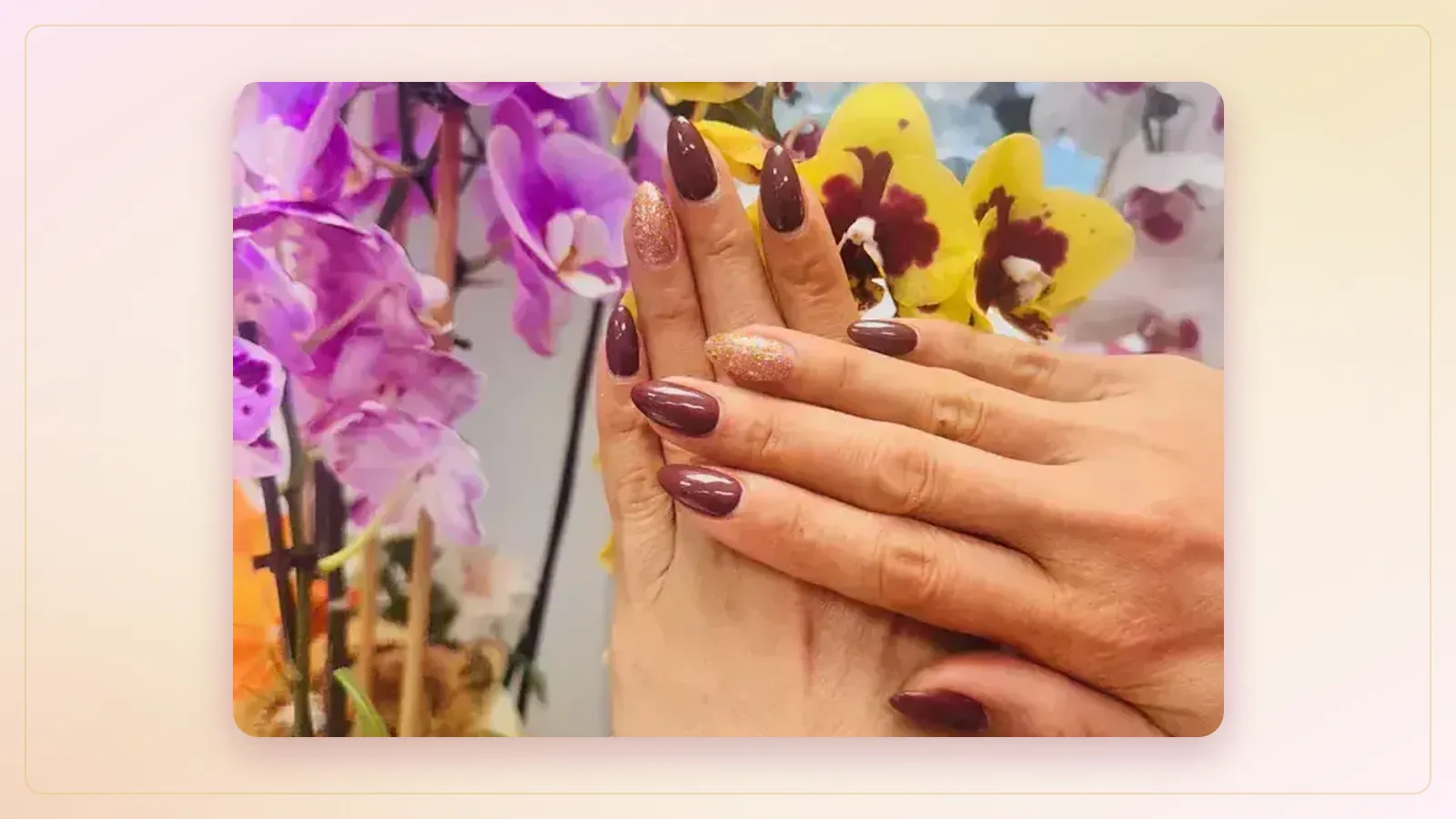
In Summary
- Filing the top layer, then soaking in acetone, is the safe method.
- Gel softens fastest, dip takes longer and acrylic takes the longest.
- Peeling, prying or biting a set off removes layers of your nail.
- Hydrate nails and cuticles after every removal.
What is the safest way to remove gel, dip or acrylic nails?
The safest method for all three is to file off the top layer and then soak in acetone. Acetone softens the product so it can be gently lifted away, instead of being pried off with the top layers of your natural nail attached. It takes patience: gel softens fastest, dip powder takes longer and acrylic needs the most time. At the salon, a technician controls each step so your nails stay intact.
How does professional nail removal work?
Professional removal follows the same six steps for gel, dip and acrylic; only the filing and soak time change. Your technician thins the product, lets acetone do the work and lifts away only what has softened. Anything still firm goes back to soak. The visit ends with buffing and hydration, and you can go straight into a fresh set or let your nails rest.
- Tell your technician what you are wearing: Say whether the set is gel, dip powder or acrylic and how long you have worn it, so the right soak time and tools are used.
- File off the top layer: The shiny top coat is filed away so acetone can reach the product underneath. Acrylic and thick dip are thinned down first.
- Soak in acetone: Nails soak in acetone, or are wrapped in acetone-soaked cotton and foil, until the product softens.
- Lift the softened product gently: A pusher slides the loosened product away. Anything still firm goes back to soak instead of being scraped or pried.
- Buff and smooth the nail: The nail surface and edges are lightly buffed to clear residue and smooth any rough spots.
- Hydrate nails and cuticles: Cuticle oil and hand cream replace the moisture acetone draws out. Then choose a fresh service or let your nails rest.
| Product | Typical soak | How to book it | Price |
|---|---|---|---|
| Gel polish | About 10 to 15 minutes | Gel removal on its own | $10 |
| Gel polish, then new gel | About 10 to 15 minutes | Gel manicure with take-off | $40 |
| Dip powder, then a new dip set | About 15 to 20 minutes | Full set take-off | $60 |
| Acrylic | About 20 minutes or more | Acrylic soak-off | $20 |
Why should you never peel or pry off your nails?
Gel, dip and acrylic bond tightly to the surface of your nail. When you peel or pry them off, the product often takes the top layers of the nail with it, leaving nails thin, patchy and bendy for weeks while they grow out. Biting the edges does the same. If a set lifts before you can get in, smooth the snag with a file and keep it dry until your appointment.
- Do not pry, peel or bite a lifted edge, even when it is loose.
- Smooth any sharp corner gently with a file so it cannot catch.
- Keep the nail dry, and wear gloves for dishwashing.
- Do not glue a lifted piece down; water can get trapped underneath.
- Book a removal or repair as soon as you can.
- Gel removal on its own
- $10
- Acrylic soak-off
- $20
- Gel manicure with take-off
- $40
- Dip full set with take-off
- $60
Warning: We do not recommend removing acrylic or dip at home: forcing it off is the most common cause of thin, damaged nails. If a nail is painful, swollen or separating from the nail bed after removal, see a doctor or dermatologist rather than covering it with a new set.